Farm & Ranch Fencing in Fulshear, TX
Pipe corral, no-climb horse fence, barbed wire, and high-tensile wire built for the working ranches and equestrian properties around Fort Bend County.
Get a Free Estimate (346) 229-0246Farm & Ranch Fencing in Fulshear, TX
Working ranches and equestrian properties have different fencing needs than residential lots. Containment matters more than appearance, the runs are longer, the gates need to handle livestock and equipment, and the materials have to survive Houston humidity and hurricane-season weather without constant maintenance. Fulshear Fence Builders installs farm and ranch fencing across the rural fringe of Fort Bend County — particularly out toward Simonton, Brookshire, Needville, and the larger acreage properties around the outskirts of Fulshear — including pipe corral, no-climb horse fence, T-post and barbed wire perimeter, high-tensile wire systems, and custom ranch gates sized for trailer and equipment access.
Ranch Fence Types Built for Fort Bend County
Pipe corral is the dominant horse and livestock containment style across rural Fort Bend County — welded steel pipe set in concrete, sized for the animal and the use case. We build pipe panels for arenas, breeding pens, and full-perimeter horse pasture. No-climb horse fence (woven wire with 2-inch by 4-inch openings) prevents hoof catches and is a common choice for property lines around horse property. T-post and barbed wire perimeters are still standard for cattle and large pasture work where cost-per-foot matters and the animals don't push the fence. High-tensile wire systems offer strength with less material cost on long runs. Pipe and cable — galvanized cable strung between pipe posts — is a common choice for entry frontage and pastures where appearance matters as much as containment. The right system depends on what you're containing, what you're keeping out, and how much pasture you're working with.


Free Farm & Ranch Fence Estimate
Limited Slots Available This Month!
Equestrian Fencing Around Fulshear
The horse property tradition runs deep across the western edge of Greater Houston — particularly in Simonton, the rural areas around Fulshear, and the larger lots scattered through Brookshire and Needville. Equestrian fencing has specific requirements that residential fence companies often miss. Heights matter (typically 5 to 6 feet for horses, with no-climb mesh or smooth wire to prevent hoof entanglement). Visibility matters (high-visibility tape or rail tops on wire fences prevent horses from running through). Gate widths matter (16-foot ranch gates are common to allow trailer, hay, and equipment access). And materials matter — barbed wire is generally not recommended for horses due to injury risk, even though it's standard for cattle. We build with these constraints in mind and ask the right questions before quoting the job.
Installation on Ranch-Scale Properties
Long ranch runs introduce challenges residential installs don't face. Fort Bend County clay across a 100-foot residential fence is one issue; clay across 2,000 feet of perimeter is a different scale of project. Our crews bring the equipment needed to handle rural lots efficiently — skid-steer post drivers, tractor-mounted augers, and the fencing pliers and stretchers that get long wire runs done right. Tension on wire fences has to be set correctly — too loose and animals push through, too tight and posts lift over time. Bracing at corners and gates is essential and often shortcut by less-experienced installers. We build H-braces and corner assemblies to spec on every wire fence project. Gates are sized for actual ranch use with hardware rated for the load and the cycles a working ranch gate sees.
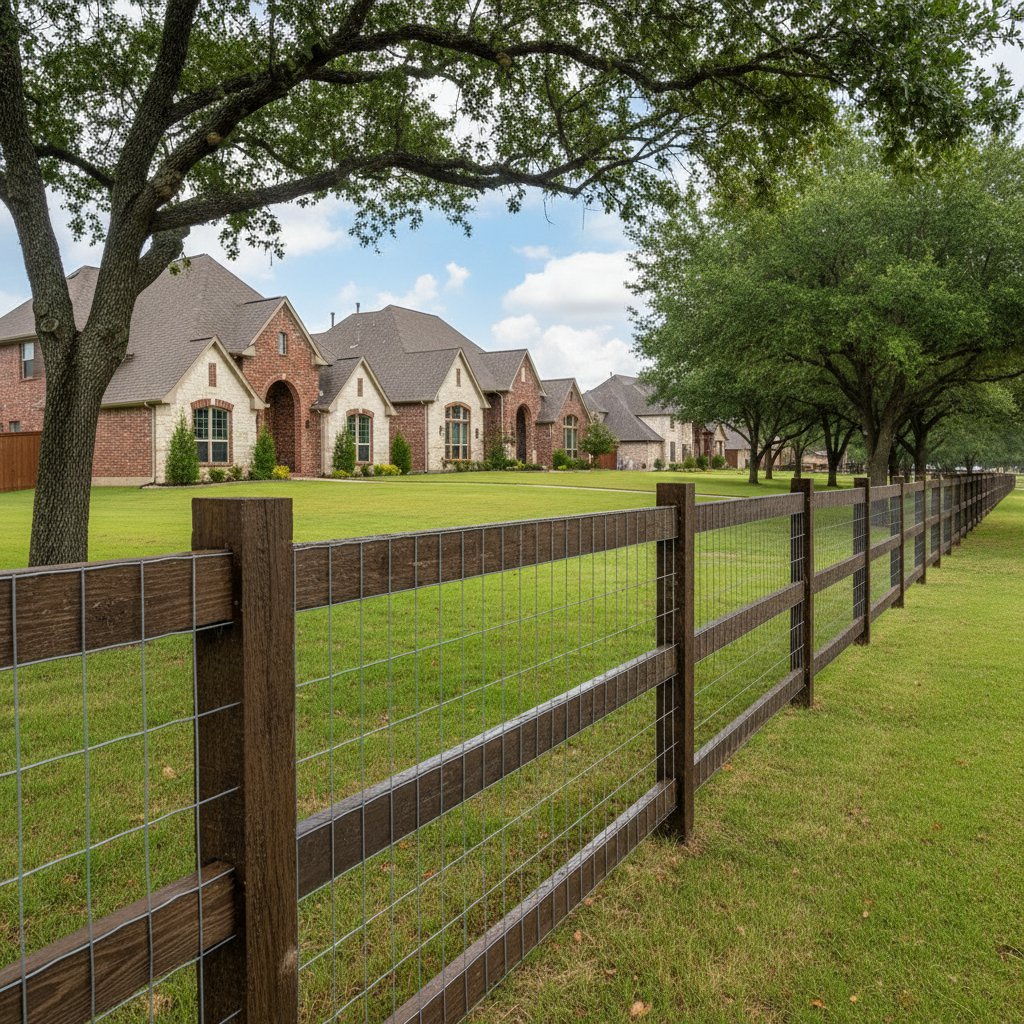
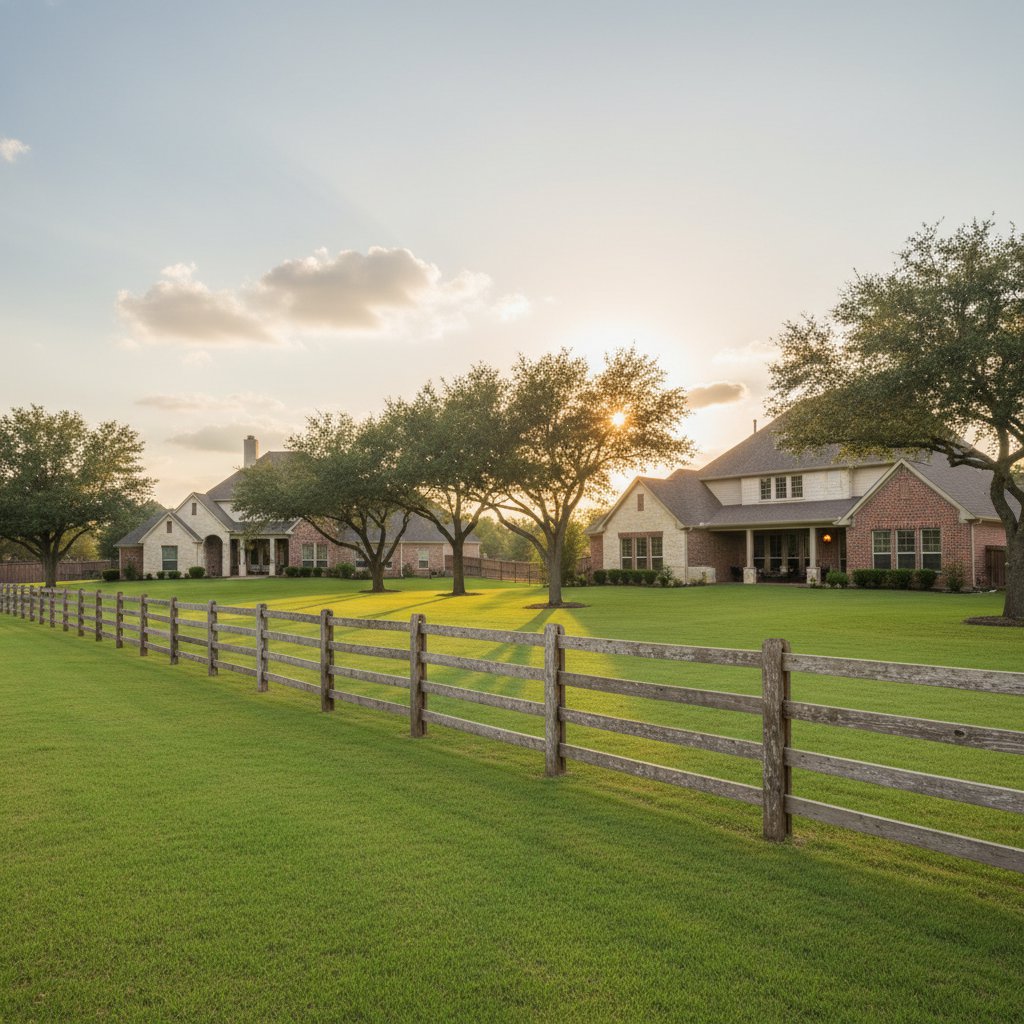
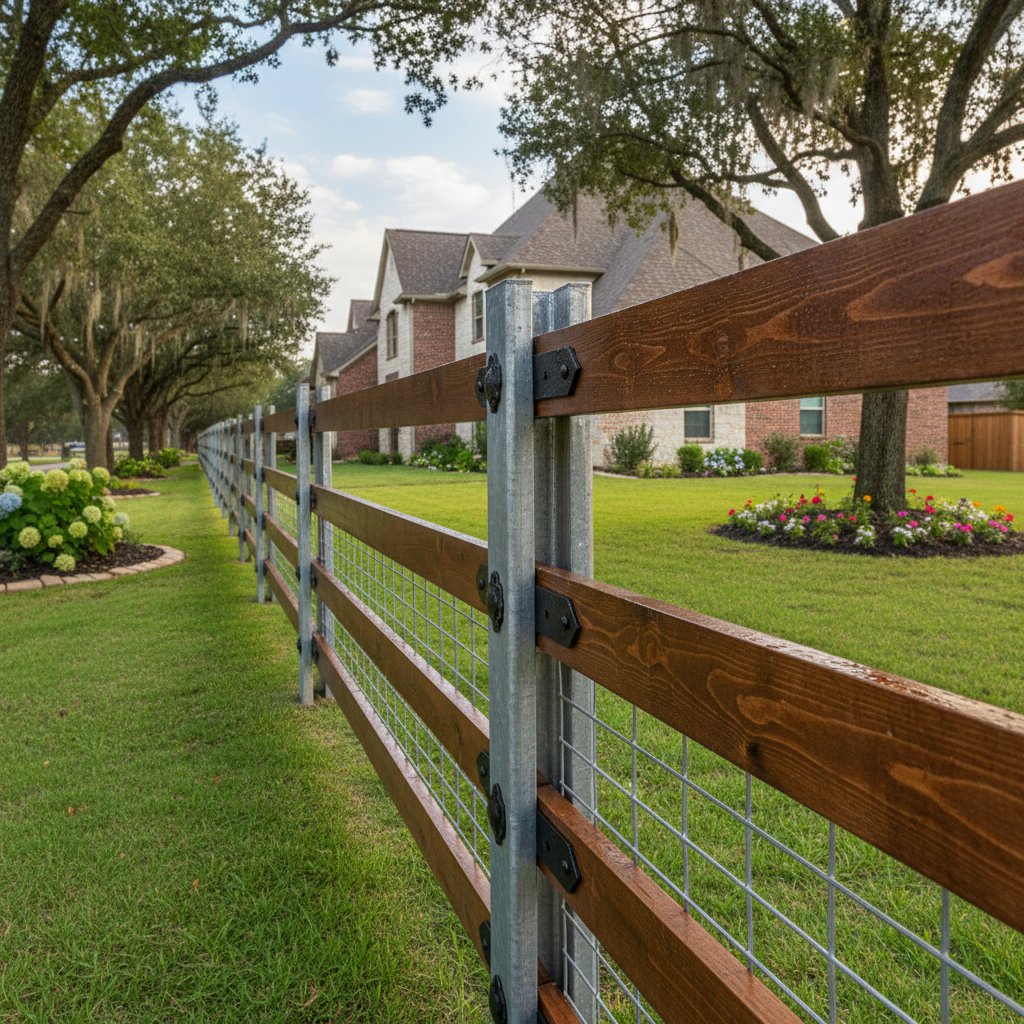
Farm & Ranch Fence Projects Across Fort Bend County
Signs Your Ranch Fence Needs Work
Ranch fencing fails in predictable ways. Watch for these signs.
Sagging or Loose Wire
Wire that's lost tension over years of seasonal cycling will sag, allowing livestock through and creating injury risk. Re-tensioning is straightforward; full re-runs may be needed on older fences.
Failed Corner or Gate Bracing
H-braces and corner assemblies carry the load of every linear foot of wire they anchor. When they shift or break, the entire run goes slack. Inspect bracing yearly on working fences.
Damaged or Missing Pipe Sections
Pipe corral takes abuse from livestock pressure, equipment contact, and storm damage. Bent or broken pipe sections need repair before they create gaps or injury hazards in pens and pastures.
Broken or Sagging Gates
Ranch gates see heavy daily use. Hinges loosen, frames bend under repeated equipment contact, and latches fail. A gate that won't latch is a gate that won't contain animals reliably.
How We Build Farm & Ranch Fencing
A clear process built around the realities of working property.
Free On-Site Estimate
We visit the property, walk the fence line, discuss the use case (cattle, horses, perimeter, arena), and provide a written estimate with materials and labor itemized.
Layout and Material Staging
Long ranch runs require thoughtful layout — corner placement, gate location, and material staging affect both cost and longevity. We plan the run before pulling the first post.
Posts, Bracing, and Wire
Posts are set to depth appropriate for soil and fence type. H-braces and corner assemblies are built before wire goes up. Wire is tensioned correctly on each pull.
Gates and Final Walkthrough
Ranch gates are hung level and sized for actual use. We walk the finished fence with the property owner to confirm tension, gate operation, and bracing before signing off.
What Our Clients Say
"Cedar privacy fence around our backyard off Cross Creek Bend Lane. Crew worked through the August heat without cutting corners — posts are dead plumb and the gate latches perfectly. Two storms later it hasn't budged."

Farm & Ranch Fence Estimates in Fulshear — Call Today
Contact Fulshear Fence Builders at (346) 229-0246 for a free estimate on farm and ranch fencing in Fulshear or anywhere across Fort Bend County.